
Annual Conference of ISMMACS in Conjunction with the International Conference on
Advances in Applied Mathematics and Computational Techniques (AAMCT)
and Pre-Conference Workshop on
Mathematical Modeling in Science and Engineering:
Interdisciplinary Applications and Research Perspectives
Workshop: 17 December 2026
Conference: 18–20 December 2026
Organized by
Department of Mathematics
School of Advanced Sciences
VIT-AP University, Amaravati, Andhra Pradesh, India
300+
Expected Participants
30+
Invited Speakers
15
Research Themes
4
Conference Days
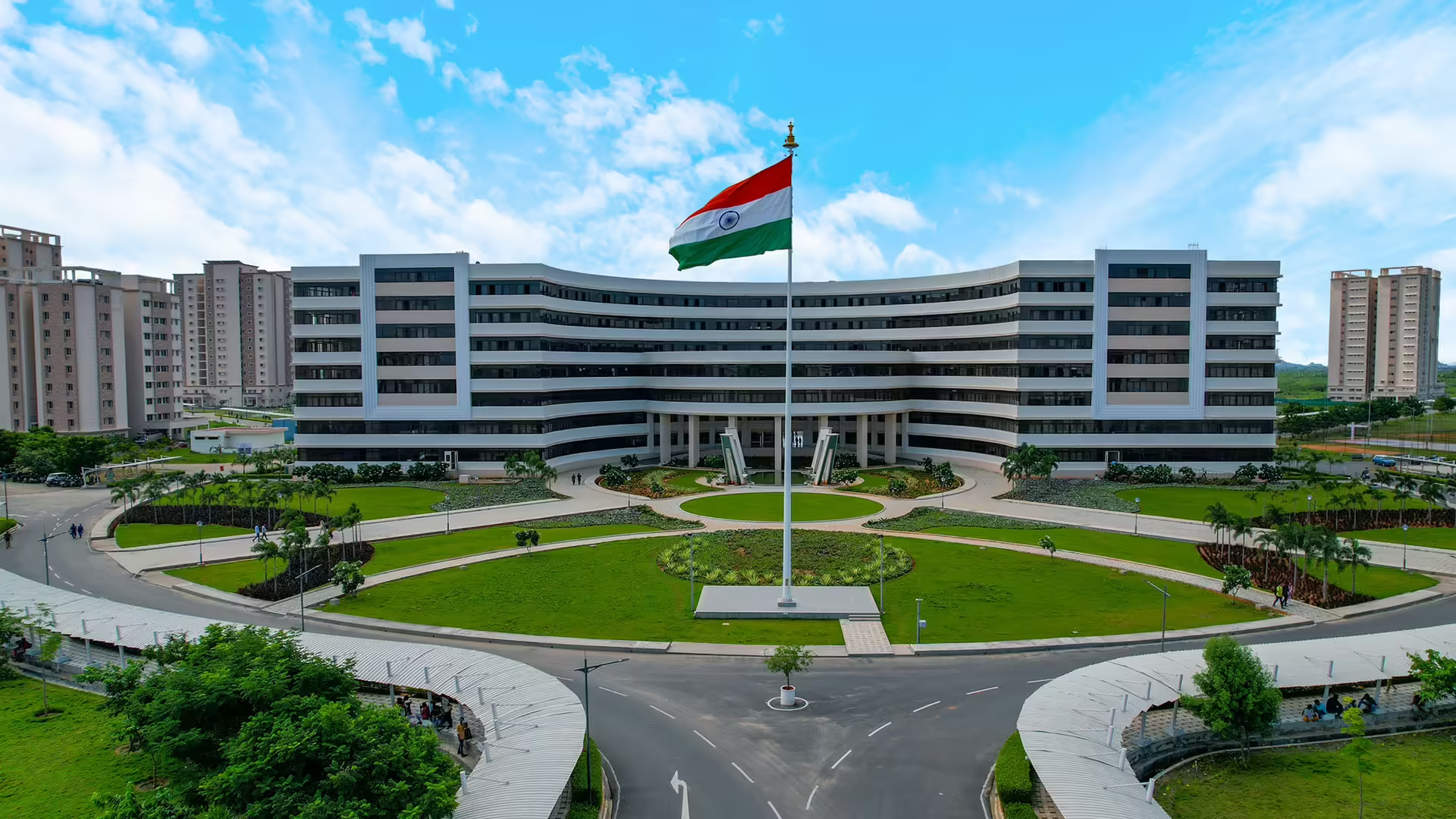
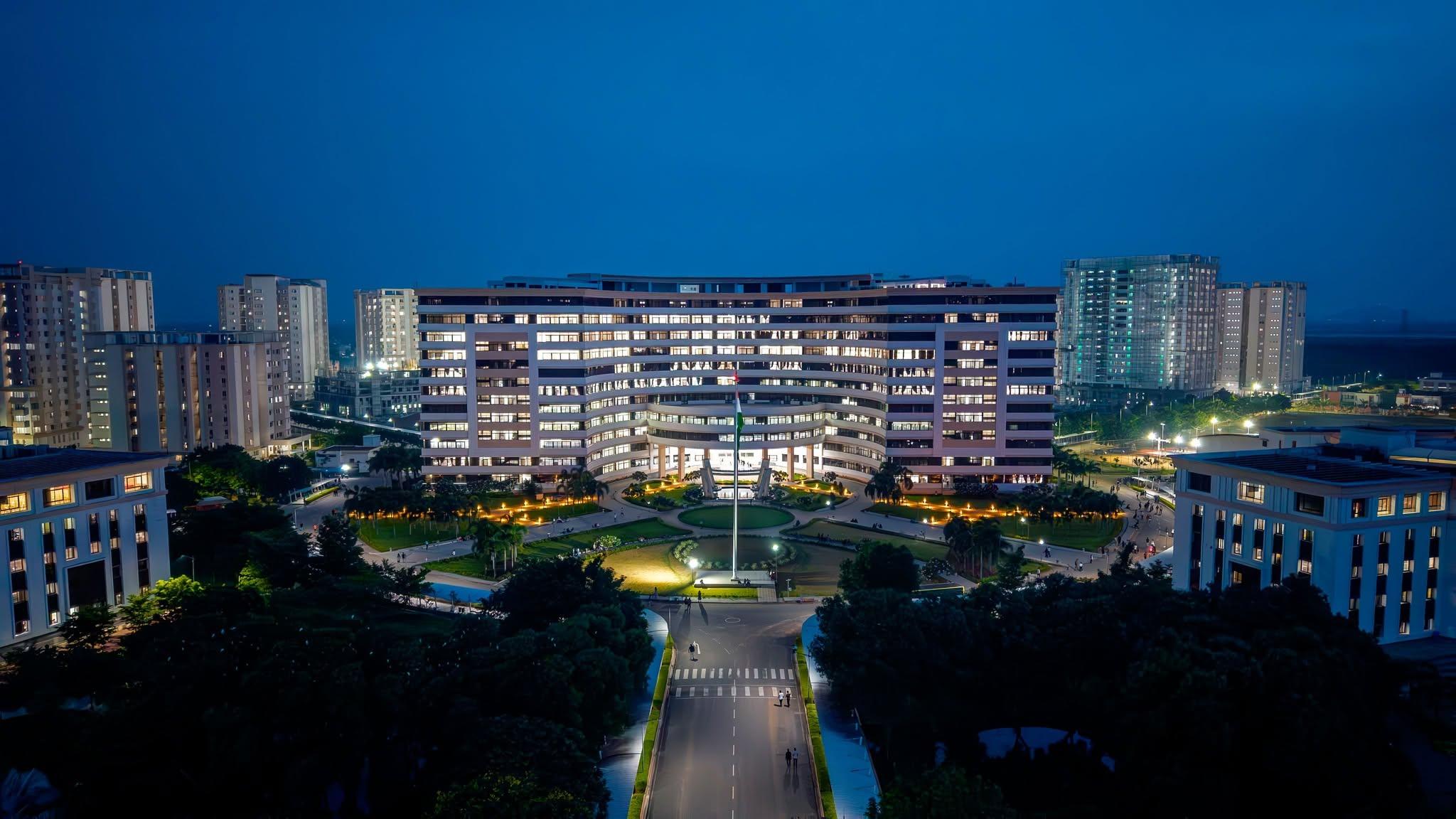
VIT-AP University
Established under the visionary leadership of its Founder and Chancellor, Dr. G. Viswanathan, VIT-AP University has emerged as one of India's leading institutions of higher education, renowned for excellence in academics, research, innovation, and global engagement. The University has been ranked No. 1 among Emerging Private Universities in India by Outlook (2022–2024), awarded the QS I-GAUGE Gold Rating (2025), and recognized among the CSR Top Leading Universities in India (2026). With world-class infrastructure, distinguished faculty, and a research-driven ecosystem.
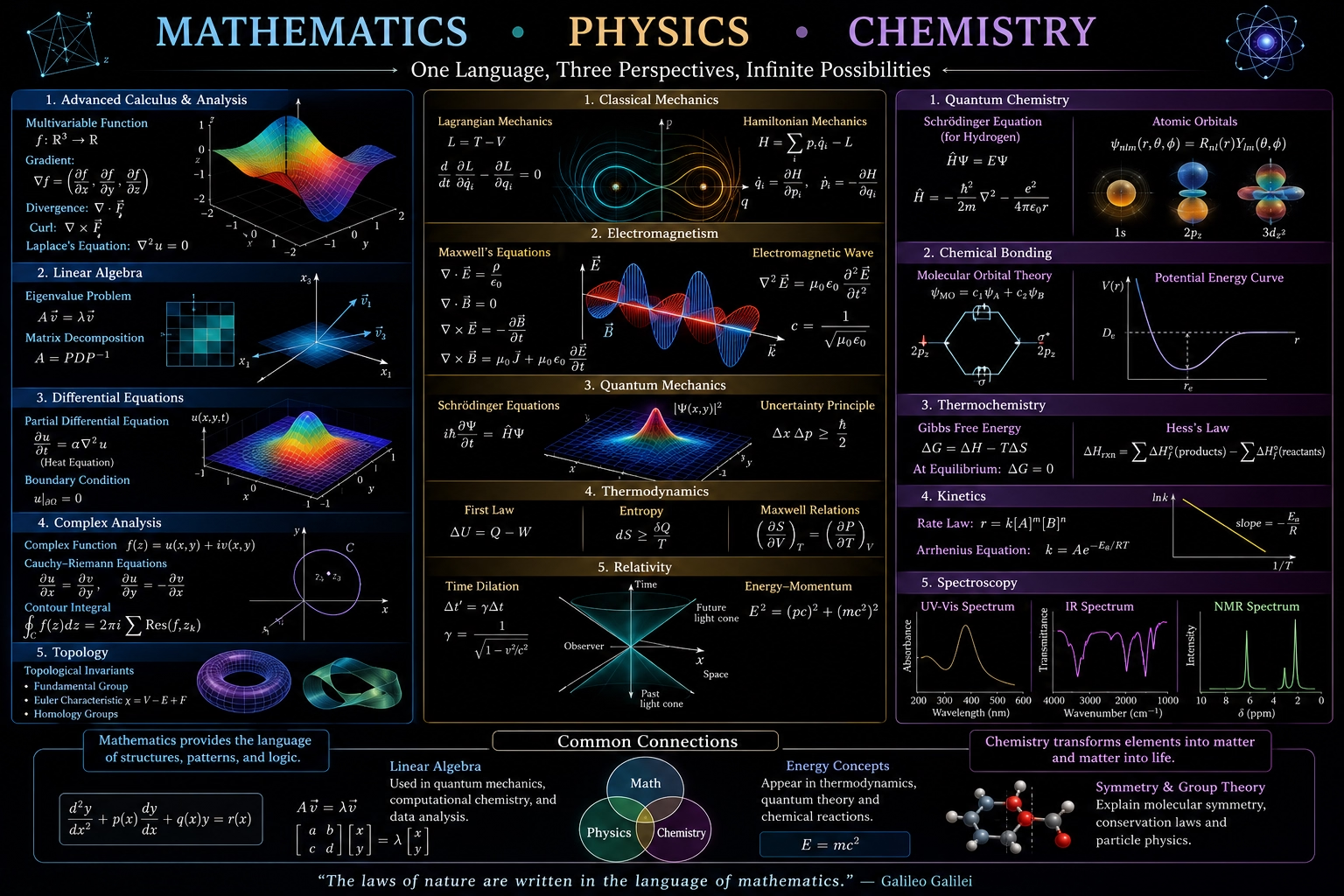
School of Advanced Sciences
One of the cornerstone structural components of VIT-AP University, comprising the core Departments of Mathematics, Physics, and Chemistry. SAS relentlessly fosters deep critical thinking, multidisciplinary innovation, and rigorous scientific inquiry through project-based learning architectures and foundational cross-disciplinary education across all higher academic tiers.
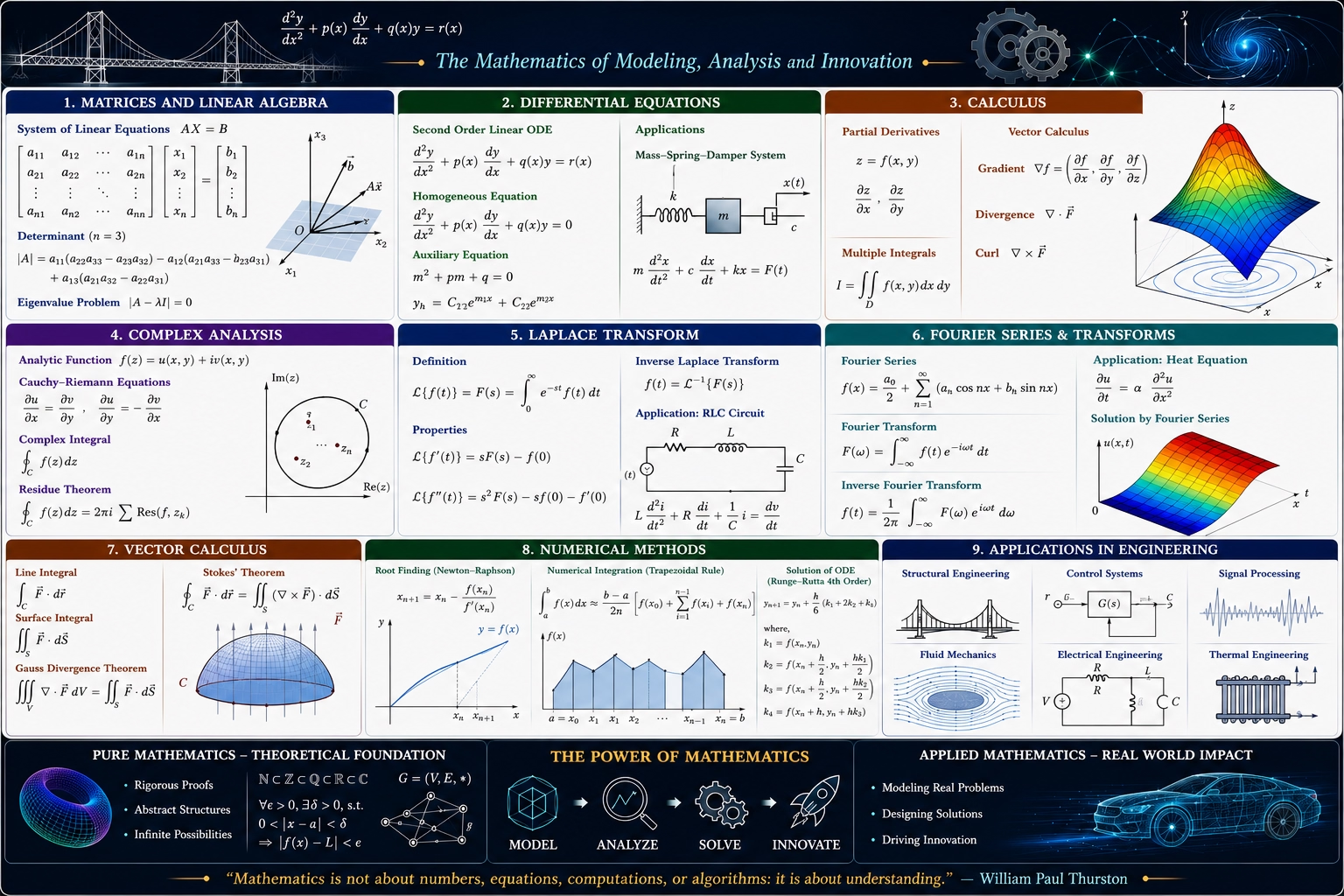
Department of Mathematics
The official driving force and organizing core of AAMCT 2026. Comprising an elite cadre of over 100 highly qualified faculty members all holding doctoral degrees, the department spearheads pioneering analytics pipelines, specialized Data Science degree programs, and pushes breakthroughs across both pure and applied mathematical frontiers.
Programs Offered

ISMMACS
The Indian Society for Mathematical Modelling and Computer Simulation (ISMMACS), established in 1993 and headquartered at IIT Kanpur, is a premier professional society dedicated to advancing mathematical modelling, computational science, and simulation. Through conferences, symposia, workshops, and research initiatives, ISMMACS promotes interdisciplinary collaboration, knowledge dissemination, and excellence in science, engineering, and technology.
Core Objectives
About the Conference
The Conference-cum-Workshop provides an outstanding forum for the dissemination of knowledge, the exchange of innovative ideas, and the cultivation of meaningful academic and research collaborations in differential equations, mathematical modelling, and dynamical systems.
Organized by the Department of Mathematics, School of Advanced Sciences, VIT-AP University, this event brings together the Annual Conference of ISMMACS alongside a pre-conference workshop on Mathematical Modelling in Science and Engineering — Dec 17–20, 2026.
Global Research Collaboration
Connect with international researchers, faculty members, and industry experts working at the forefront of mathematical modelling, dynamical systems, and computational sciences.
Cutting-Edge Scientific Discussions
Explore emerging research areas including fractional differential equations, scientific machine learning, nonlinear dynamics, chaos theory, and computational fluid dynamics.
Opportunities for Young Researchers
Present your research, engage with leading mathematicians, and gain recognition through conference awards and publications in reputed indexed journals.
Workshop Themes
The pre-conference workshop is designed to equip young researchers, doctoral scholars, and early-career faculty members with a comprehensive understanding of the theoretical foundations and computational methodologies of dynamical systems.
The programme will introduce participants to contemporary analytical and numerical techniques, emerging research directions, and interdisciplinary applications, while providing insights into current challenges and opportunities in the field.
Ordinary and Partial Differential Equations in Mathematical Modelling
Nonlinear Dynamical Systems
Chaos and Bifurcation Theory
Fractional Dynamical Systems
Numerical Methods, Computational Solvers, and Scientific Simulations
Modern Statistical Learning from Classical Statistics to Artificial Intelligence
Applications in Biological Systems, Climate Modelling, and Control Theory
This workshop provides a valuable platform for participants to gain critical insights into contemporary methodologies, evolving research paradigms, and promising avenues for future investigation in mathematical sciences and computational techniques.
Conference Themes
The conference aims to provide an international platform for researchers, academicians, industry professionals, and students to present and discuss recent advances in differential equations, dynamical systems, and computational mathematics.
It will foster interdisciplinary collaboration and facilitate the exchange of innovative ideas across a broad spectrum of theoretical, computational, and applied research. The conference invites original research contributions in, but not limited to, the following areas:
Analytical and Numerical Methods for Ordinary and Partial Differential Equations
- Analytical techniques for ordinary differential equations
- Numerical schemes for partial differential equations
- Boundary value problems and singularly perturbed problems
- Finite element and finite difference methods
Mathematical Modelling and Scientific Computing
- Mathematical models in science and engineering
- Scientific computing and simulation
- Interdisciplinary mathematical applications
- Computational approaches to real-world problems
Computational and Bio Fluid Dynamics
- Navier–Stokes equations and turbulence
- Bio-fluid mechanics and hemodynamics
- Magnetohydrodynamics and heat transfer
- Computational fluid dynamics simulations
Controllability, Observability, and Stability of Differential Equations
- Controllability of ODEs and PDEs
- Observability and state estimation
- Stability analysis and Lyapunov methods
- Optimal control theory
Scientific Machine Learning and Its Applications
- Physics-informed neural networks
- Data-driven modelling approaches
- Deep learning for differential equations
- AI applications in mathematical sciences
Fractional and Delay Differential Equations
- Fractional-order differential equations
- Delay and functional differential equations
- Numerical methods for fractional models
- Applications in viscoelasticity and anomalous diffusion
Special Functions and Their Applications
- Hypergeometric and Bessel functions
- Orthogonal polynomials and transforms
- Special functions in physics and engineering
- Generating functions and integral representations
Dynamical Systems, Nonlinear Dynamics, and Chaos
- Nonlinear dynamical systems analysis
- Chaos theory and bifurcation theory
- Fractional dynamical systems
- Stability and long-term behaviour
Applied Algebra and Analysis
- Abstract algebra and its applications
- Functional analysis techniques
- Operator theory and spectral methods
- Applications in differential equations
Spectral Graph Theory and Its Applications
- Graph spectra and eigenvalue problems
- Algebraic graph theory
- Network analysis and connectivity
- Applications in data science and engineering
Optimization and Game Theory
- Convex and non-convex optimization
- Multi-objective and stochastic optimization
- Nash equilibria and cooperative games
- Applications in economics and engineering
Probability, Statistics and Data-Driven Decision Making
- Probabilistic modelling and statistical inference
- Regression, classification, and predictive analytics
- Uncertainty quantification and risk assessment
- Data-driven decision frameworks in science and engineering
Symposia Themes
The conference cum workshop will also feature a series of specialized thematic symposia focusing on:
- Recent Advances in Quantum Computing, AI, and Machine Learning for Scientific and Engineering Applications
- Recent Trends in Non-linear Dynamics and its Interdisciplinary Applications
- Advances in Rheological Fluid Flow Modeling and Simulation
Keynote & Invited Speakers
Distinguished mathematicians and researchers from leading universities and research institutions across India and the world.

Dr. B V Rathish Kumar
IIT Kanpur
India
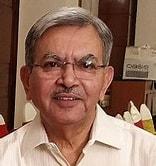
Dr. Peeyush Chandra
IIT Kanpur
India
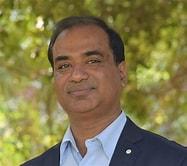
Dr. Shalabh
IIT Kanpur
India
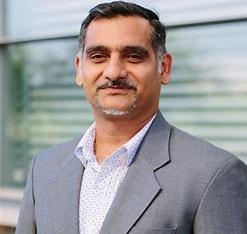
Dr. Anuj Mubayi
IBA Fellow, USA
USA
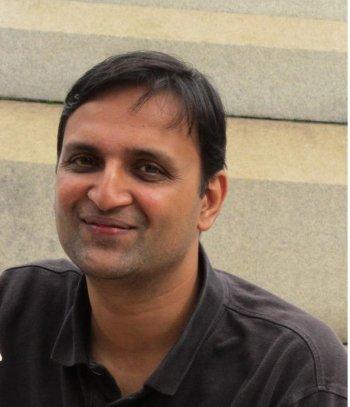
Dr. Ashwin Vaidya
Montclair State University, USA
USA
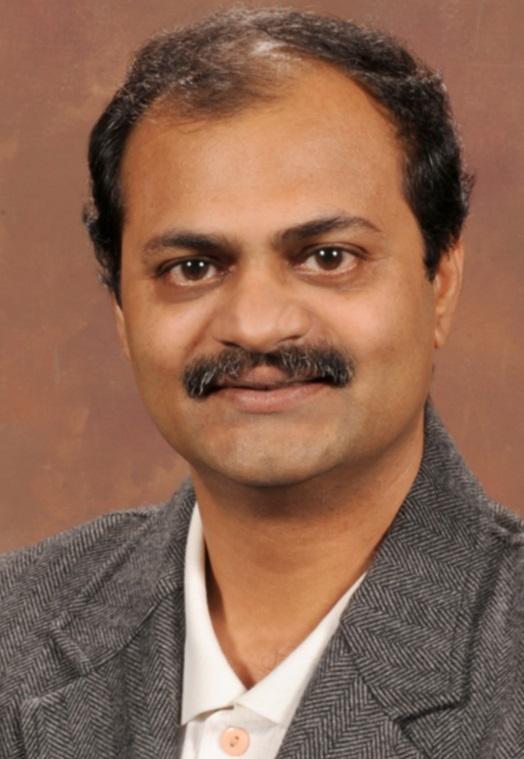
Dr. Arni S.R. Srinivasa Rao
Augusta University, USA
USA

Dr. Arvind K Misra
BHU, Varanasi
India

Dr. C S Sastry
IIT Hyderabad
India
Publication
Selected papers will be considered for publication in SCOPUS INDEXED Journals:

Kongzhi yu Juece / Control and Decision
International Journal of Maps in Mathematics
Additional publication partners will be announced on the conference website.
Best Paper Awards will recognize outstanding presentations.
Important Dates
Key deadlines and milestones for AAMCT 2026.
31 October 2026
Abstract Submission Deadline
In progress
5 November 2026
Abstract Acceptance Notification
15 November 2026
Full Paper Submission Deadline
Dec 17–20, 2026
Conference & Workshop Dates
31 October 2026
Abstract Submission Deadline
In progress
5 November 2026
Abstract Acceptance Notification
15 November 2026
Full Paper Submission Deadline
Dec 17–20, 2026
Conference & Workshop Dates
Registration Fees (Including 18% GST)
Secure your participation at the Annual Conference of ISMMACS & International Conference on Advances in Applied Mathematics and Computational Techniques. Registration fees include 18% GST.
| Category | Workshop | Conference | Workshop + Conference |
|---|---|---|---|
| ISMMACS Members/VIT Members | Rs. 750/- | Rs. 3,500/- | Rs. 4,250/- |
| Students (UG/ PG/ Research Scholars) | Rs. 750/- | Rs. 3,750/- | Rs. 4,500/- |
| Faculty/Post Doc/Industrial participants | Rs. 1,000/- | Rs. 4,000/- | Rs. 5,000/- |
| Foreign Participants | 25 USD | 75 USD | 100 USD |
International participants are requested to contact the conference organizers via email for registration.
Accommodation for the participants is available in the campus on minimal charge basis.
Room Types & Charges
Accommodation facilities are arranged at University Men's and Ladies Hostels based on availability and prior request.
| Room Type | Room Fare (per day) |
|---|---|
2 Bed AC SharingAC | Rs. 800/-/day |
2 Bed Non-AC SharingNon-AC | Rs. 500/-/day |
4 Bed AC SharingAC | Rs. 600/-/day |
4 Bed Non-AC SharingNon-AC | Rs. 400/-/day |
Accommodation facilities are arranged for conference participants at the University Men's and Ladies Hostels based on availability and prior request. The hostel accommodation is provided with both Air-Conditioned (AC) and Non-Air-Conditioned (Non-AC) options in 2-bed and 4-bed sharing arrangements.
The accommodation charges are inclusive of 5% GST and will be applicable as per the duration of stay. The accommodation package will also include a special breakfast for the participants during their stay, ensuring a comfortable and convenient experience throughout the conference period.
Booking Information
Participants who require hostel accommodation are requested to book through the official VIT-AP Events portal — the same link used for registration and payment, active from First week of August. Accommodation will be allotted on a first-come, first-served basis, subject to availability.